Category Archives: writing

Bound A-Z: N is for Nox

Backstory is a tough thing for a writer to deal with. Ideally, we know everything about a character’s background. We know his secret obsessions, the details of her first heartbreak, his grade-school enemy, her favourite book. All of this affects the character in tiny ways, and our knowledge helps make him or her more real on the page.

The thing is, not all of this stuff should actually be on the page. Maybe that time she fell up the stairs in junior high was embarrassing and made her a little more shy than she was before, but it’s not relevant to the werewolves she’s killing at age twenty-five. Telling readers about it would slow the story down, and that’s generally the last thing we want to do if we can avoid it.

The question we often have to ask when editing these things out is: Is this relevant, or merely somewhat interesting? Does knowing this affect the reader’s enjoyment of and immersion in the story? And is that for better, or for worse?

Nox is a character whose backstory has suffered more than its share of cuts. It’s interesting stuff. Some of it was (I think) nicely written. But the fact is that sometimes taking a break to share that backstory puts the brakes on things when we really don’t want to. Going from an action sequence and a big revelation to musings on one’s childhood can be…

*Zzzzzzzzz…*

Sorry. And in two cases, I’ve cut information about Nox’s past that wasn’t vital to understanding the story or her character. It’s been hard to do. I love Nox, and I know some of you want to know more about her.

So here you go. A little information on her early years, dedicated to the person who recently called Nox “my book girlfriend,” and also to the person who named her kitten “Nox.”
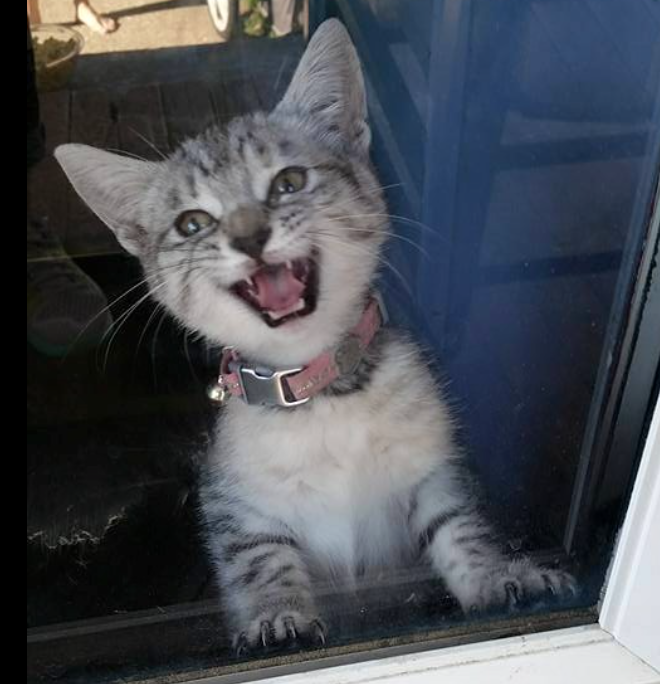
This post isn't about her, but COME ON.

This post isn’t about her, but COME ON.

[The following information was cut from Sworn in the interests of relevance and pacing]

Nox (named Avalon by her parents) was born, coincidentally enough, on the same day as her twin brother Aren.

*cough*

Her birth was never officially recorded, and as far as most people know, only one child was born that day. There were a few reasons for this, but one was superstitions regarding twins. It’s widely believed that twins with magic will have the power of one person divided between them, and will be perceived as weak because of it. Most thinking people don’t truly believe this, but it’s a superstition that’s been around long enough that it does affect people’s biases.

In any case, it was decided that only one birth would be recorded. Since Aren was more likely to find a significant place in the royal family, his birth was acknowledged. As a male he was more likely to possess magic, and even at birth he showed potential. Avalon showed none. In fact, for as long as they both lived in the palace it seemed that if their power was divided, Aren had claimed all of it.

Now, this doesn’t mean there was great fanfare and a country-wide celebration. Life in the royal family is very much a “survival of the fittest” situation, and making things too public does make a mess of things if a king wants to cover up disasters. Still, people who lived and worked in the palace knew about Aren, and his mother’s servants guarded him from danger when she no longer could.

Little Avalon was less fortunate.

For her own safety, only a few people ever knew who she was. There was her mother, of course, who loved both of her children equally regardless of magic. She had no magic herself, remember, and if anything she felt more protective of her daughter, who would never be able to defend herself in this cutthroat family. Ulric knew, but he had so little to do with his children at that age as to make his involvement irrelevant.

And then there was the wet nurse.

Well… she wasn’t, really. She was a trustworthy and well-paid young woman who was brought in from another province. Someone with no connections in Luid, and few back at home. No one thought twice about the fact that the king’s last wife chose to have another woman feed the new prince, and if it seemed unusual that the nurse and her new daughter lived so closely with Magdalena and her baby boy, well, people from Belleisle are strange anyway.

Of course, the wet nurse had no baby, though everyone thought that Avalon was hers. In fact, that wet nurse spent her days assisting with the babies and keeping their mother company, but their mother fed them both. No one outside of those rooms had reason to question the situation. Even when the wet nurse stayed on as nanny, it seemed only somewhat unusual. Avalon lived with her, but saw plenty of her mother, and was sometimes allowed to play with her brother (though they never got along well).

And then, of course, came disaster.

[Torn spoilers ahead]

Ulric was forced to send Magdalena away, to let everyone believe she was dead. She took Avalon with her, knowing that there was no place for a girl with no magic in Luid. She changed her daughter’s name to Nox, a hard and cold name that she hoped would help her daughter become what she needed to be to survive in an equally cold and hard land. They never spoke of the city or the palace again–not until Nox was old enough to understand that she should never try to claim her place as a princess of Tyrea.

BONUS:

Here are the paragraphs that I cut from Torn, again in the interest of preserving story momentum. I still like these words, and I hope you enjoy them.

(These were Nox’s first words after meeting Aren, Kel, and Cassia)

I’ve never liked surprises.

I don’t remember much about my first home or my first family. I remember leaving, though, being scooped out of my bed, wakened from sleep and taken from my warm bedroom out into the cold night with a blanket wrapped around me. My mother held me in her lap as we rode in the back of a wagon. I remember the smell of hay, and horses, and the driver’s pipe. My mother cried every day of our journey, and I thought she’d never stop.

That was the first surprise I remember, and I haven’t had many pleasant ones since.

My rescuers were a surprise I wasn’t sure about. I’d resigned myself to going to Luid, accepting that fate was leading me there to kill my oldest half-brother. I knew little about that family aside from rumor and reputation, but I felt confident that I would find a way to do it. The hatred that had grown in me since I had learned my true identity and the reason for my mother’s banishment would finally bear fruit.

But then this group of strangers had appeared, and now I found myself leading them down the road, away from my old life. Moving forward.

How will Nox move her life forward after everything that’s changed?

We’ll find out soon enough.


Bound A-Z: M is for Magic

Magic

Trying to explain magic is like trying to explain life, or God. At least, it is if you’re a character in one of my books. I, on the other hand, have inside information.

And I’m going to share a little of it with you, at the request of a lovely reader.

Those of you who are reading my books know some things, with more revealed in each book (because honestly, I find it dull to have everything laid out in exacting detail at the outset, with no surprises left). There’s more to come, believe me.

Magic is a huge and wonderful challenge for a writer. We get to decide what magic is, how it works, why it works and who it works for, what it’s capable of and (even more importantly) what its limitations are.

We decide how much we’ll explain and how much mystery we leave. We decide whether characters will use spells or wands or potions or elements to control magic, whether magic obeys the laws of physics as we understand them, or whether it exists beyond them–and what that means for the world we’ve created.

This is by no means an exhaustive examination of the magic system in the Bound trilogy, but it might answer a few questions. I’ll try to avoid spoilers, and warn if they pop up.

Today we’ll look at Sorcerers and Sorceresses, and magic-users with that type of magic who don’t quite qualify at that level. I’ll be saying “he” because that’s how this sort of magic tends to skew, especially in Tyrea, but we all know that Sorceresses have the capacity to be every bit as powerful.

Again, we’re only covering the basics here, or this will become a very long post, indeed. And we’ll focus on Tyrea, because there are factors that affect things in Darmid and Belleisle.

The easiest way to think of magic is to compare it to electricity. Assuming the power bill is paid up and the house is well-maintained, you can plug a cord into the wall and get power. And it’s all the same power. Plug a blow-dryer in at a bathroom outlet, and it’s going to get the same juice as the toaster in the kitchen.

Of course, the effects are quite different, aren’t they?

Your blow-dryer’s not going to make you toast, even if you bring it to the kitchen. And you could try to dry your hair with that toaster, but I really wouldn’t recommend it if you don’t like soggy roots and the smell of burnt hair.

That’s really the best way to think of natural magic skills, too, though it’s not a perfect analogy. A toaster was created to toast (I’m going to keep saying toast until it doesn’t look like a real word anymore. Toast). In the same way, a Sorcerer might have a natural skill with, say, fire creation. The Sorcerer will still have to work to develop that skill, but it will be fairly simple if he’s strong and puts the work in. It’s like walking. He has to learn, but it becomes second nature if nothing interferes.

Now, not everyone in Tyrea has natural skills. Even if many people have the ability to channel a little magic, most people won’t have the capacity to use enough to have any effect at all on the world around them. They may not even be aware that the magic is in them.

In fact, great and useful magic is rare–especially when monarchs have a tendency to off anyone who threatens them, but that’s another topic entirely. One fifty people might have middling magic, enough to make their lives easier and keep them healthier than most, but not enough to accomplish much in a practical sense, no matter how hard they try.

One a thousand might be capable of great things, IF he has training. And the greatest magic is rarer still.

So what happens when we move beyond natural skills? What about things like [BOUND SPOILER] Aren’s ability to change into an eagle? What about Severn’s mind-connection with a flying horse? These aren’t skills they were born with. They’re entirely learned.

[END SPOILER]

Going back to appliances: You could turn a toaster into a lamp by making modifications to it. It would run on the same electricity, and if the modifications are done correctly, it could work very well.

Maybe not as well as if you’d just bought a damn lamp, of course. The same is true with magic. A developed skill can be quite effective, and with more practice comes mastery. But it takes much longer to develop a learned skill than a natural one, and it’s far more dangerous and difficult (TORN SPOILER: see Aren and Severn’s respective skills with fire for an example of this). And there are some things that can’t be learned, or that would be too difficult to bother with, and this varies between individuals. One person might pick up transformation after five years, another might still screw it up after twenty, or a hundred.

Also, no one expects to pick up more than a handful of fully-developed skills (plus an assortment of unrefined minor skills) in his lifetime. You can turn that toaster into a lamp-toaster-BBQ lighter-bedwarmer-camp stove-battery charger, but at some point you’re going to find that none of the functions work properly because it’s a bit too… well, diversified.

There’s plenty that can go wrong with magic. It might be bound, and therefore present but useless. If the power supply is cut off completely, the effects can be disastrous and far-reaching. Magic depends on magic to sustain itself, so if magical plants and creatures are removed from the land, the magic begins to die.

And as stated in the books, picking up new skills has the added danger of unwanted effects. Sort of side-effects of attempting unfamiliar magic. These are unpredicatable, and can range from a slight drop in the temperature of the surrounding air (common, and thought to be related to unfamiliar magic requiring an energy catalyst), to bodily injury to one’s self or others. Even seemingly simple magic is not something to be attempted casually.

The dangers of magic go deeper than this, in ways few people have had to experience. You see, magic is a wonderful thing in many ways, aiding in healing and learning. This is actually something of a side-effect of magic protecting people from itself. Those effects mentioned above are only the tip of the iceberg, and without protection…

Arrrrgh. There’s so much I want to tell you all, but this post is already getting long, and I’d hate to ruin any surprises.

We’ll get there. Soon.

Okay, this has gone on long enough. Stay tuned for a shorter post on Potioners in a few weeks!


Last Chance to Enter!

Teri Polen’s giveaway (signed paperback copy of bound, mermaid charm, sea glass, and assorted papery swag) is ending soon! She’ll be announcing the winner July 31, which means there’s only a day or so left to enter. This is a fantastic prize from a generous reader, so be sure to enter!

(US and Canada only for this one, but I’ve got something different coming up for everyone else next month)

IMG_2162


Click here to enter. Good luck!


L is for Luid

Luid

Luid is the capital city of Tyrea, the home of the king, the cultural and economic centre of the country. It’s home to the greatest stores of human knowledge, to the land’s scholars and researchers and its most promising students. It sits with its face to the country, back facing the ocean, sloping upward from the harbour to the high cliffs where the nobles keep their…

Blah, blah, blah.

That’s what a guidebook would tell you about the city. The pretty things. The not-to-be-missed attractions. It might walk you through the gate quarter, which houses merchants and traders and craftsmen. It might outline various festivals occurring throughout the year, or might advise a visit to the temple of the Goddess, located in the inner city not far from the palace…which no up-to-date guidebook would advise you to visit without notice. Not these days. Not if you want a warm welcome.

The truth is, a city is a being in its own right, and old ones have a habit of keeping secrets. Were you to visit the city on a quick business trip or a relaxing vacation, you wouldn’t see the north end of the city, where the Despair presses against the wall, held back by magic that’s effective enough to keep it from grinding the people’s spirits to dust…most days. You certainly wouldn’t walk down the North End’s filthy streets and see the criminals sent through the gate in that portion of the wall as punishment when a quick execution is too merciful.

No, that’s a secret that the city keeps well, hidden behind twisting streets that seem to direct one’s feet back to more pleasant diversions.

And pleasant diversions abound. The people of Luid, especially the wealthy, want for little. Some say it’s made them lazy, that even those who have magical potential don’t use it as they might. To master any skill requires study and hard work, and most remain content with whatever undeveloped skills they’re born with. Those who do develop it can be dangerous, of course. Perhaps that’s why the king keeps them close by, and keeps them happy.

Every household, every shop, every citizen’s heart holds secrets. Secret fears, secret aspirations, secret desires and shames.

On the surface, everything shines. Clean cobblestone streets, bright shop-fronts, smiling faces.

Just tread carefully, visitor, and you’ll be fine.


K is for Kel

k

Raise your hand if you were waiting for this one.

Don’t be ashamed. He’s one of my favourites, too. As someone said in a comment on my Facebook page, “The struggle is real! Between he and Aren, I’m thinking polyamory is the perfect choice.”

That commenter is not alone.

For anyone late to the party, Kel is a mer man who befriended Aren when they were both children (though Kel may be a little older). Kel’s band of merfolk are secretive about the exact extent of their territory, but it definitely covers a portion of the sea in the north of Tyrea and several lakes in its interior, which they access via a magical system of caves. It was in the caves near Glass Lake that a young and adventurous Kel met Aren, who was almost old enough to be developing a chip on his shoulder. Kel was never one to pass up a challenge, though, and found the young human interesting enough that he decided to befriend him.

Aren resisted at first, but few people have ever been able to resist Kel’s charms–certainly not a kid with no friends or family willing to show him the kind of affection that Kel tends to.

I mean yeah, Kel’s physically attractive. Like… super hot. But that’s not what makes him appealing. You see, many merfolk have some level of ability to see beneath the surface of people. Not to read their minds as Aren does, but to see into what lies beneath the teeming, confusing, contradictory swirl of thoughts. He may not know what you’re worried about, but he’ll see the depth of your concerns. You may have built up layers of emotional armour, but Kel might see the fear beneath that, and see that it’s an act that you’ve been putting on for so long that you believe it, yourself.

Not all of the merfolk are as perceptive as Kel, and even those who are don’t always care what they see. Some believe that a person’s actions are what matter, not what lies beneath. Maybe they’re right. Seeking out the bright spots in a person’s soul is a dark and sometimes dangerous journey, and not one that even Kel chooses to undertake with many people.

But once in a while, he finds someone he connects with on that deep level, as though they were destined to meet. Sometimes he meets two of them in the same family, though with slightly different outcomes. And when Kel finds that connection, his loyalty goes beyond anything most of us have ever had the pleasure of experiencing.

He might not be the flashy hero, bold and brave, rushing into battle–at least, not when we’ve seen him. But Kel has saved lives.

And he will affect the course of Tyrean history.

Fun Fact: Kel’s name was originally Kai, which means “ocean.” I changed it when I realized how many YA/NA books coming out right now have characters with that name. I think this one suits him a lot better, and I apologize to him for getting it wrong.

Tell me: What character have you fallen in love with for reasons other than a hot body and a cocky smile?


Bound A-Z: J is for “Jumpin’ Jehosephat”

Okay, so that title is a lie. No character in the Bound trilogy has ever said “Jumpin’ Jehosephat,” and I guarantee they never will. What we really want to talk about today is cussin’, but that doesn’t start with J.

I probably don’t need to put a disclaimer here, right?

Every author has to make decisions regarding swearing: How much is appropriate, whether it will sound silly if characters in life-threatening situations don’t swear in order to keep a “clean” rating (see the aforementioned Jehosephat). For some of us it’s not a tough decision, at least until our grandparents and people from church start reading our books.

*cough*

Others have to do a bit more soul-searching.

On top of that, some genres offer additional restrictions or opportunities. Writing middle-grade fiction? Yeah, we all know first-graders who drop f-bombs like Samuel L. Jackson (if with considerably less flair), but it’s not considered appropriate to include that kid as a character in a MG book, even as the bully. Historical fiction writers will have to take into account the historical accuracy of slurs and swears. This might sound restrictive, but judging by the insults Shakespeare’s characters tossed out, I’m guessing the research there could be rather interesting.

And Fantasy and Sci-Fi allow us a range of possibilities. This article from Book Riot has a great run-down of the options authors choose. There’s the vaguely-dirty-sounding substitution, the straight-up swear, religious curses based on the world the story is set in, and more.

Anyone who’s read Bound and Torn knows I let my characters swear when it seems appropriate for the situation. As my editor said in his comments on Torn*, “You gave more shits this time, and it worked.” He thought it felt realistic for characters to swear when everything is… well, when the shit hits the fan, so to speak, to not pussy-foot around to keep things universally palatable.

Why use our curses rather than making something fantastical up? Because everything else is translated, too. My characters don’t speak English in their world. If the words “cup,” “hunting,” “dragon,” and “love” are translated, I also translate the swearing when it works. It’s what works for me as a writer, though I do look forward to writing about species that use less-conventional oaths in the future. That should be fun. And there are cases where the world impacts choice of curses. “Gods” instead of “God” for a character who believes in more than one. “Harpy” instead of “bitch,” because that’s really the more vile insult in that world. It’s all about conveying meaning, not going for shock value.

Do some readers hate swearing? Yes.

Do some readers hate “clean reads” that seem awkwardly contrived to avoid realistic language and references to sex?

*raises hand*

It’s all personal taste, and you can’t please everyone. I’ll write what feels right for my stories and characters, as I expect other writers do with theirs. I do think swearing can be over-used to the point where it becomes irritating, or the reader becomes numb to it. I love creative curses, as long as I don’t have to spend too much time figuring them out. But used properly, a well-placed cuss can add a flash of depth or colour to a serious scene, or a bit of humour to another.

“Bad words” are one of many tools available to a writer, no different from metaphors and adverbs and varied sentence length. Just like anything else, we can choose to use them, to over-use them, or to not use them at all to create mood in a scene, establish character, or add impact to a moment in a story.

They just happen to occasionally be a lot more fun than most tools. 🙂

Fun Bonus Fact: The first draft of Sworn included what I (quite modestly) considered the most perfect f-bomb ever. It came from an unexpected character, and in context no other word would have delivered the same impact or meaning. It was absolutely perfect. I was certain my alpha readers or editor would tell me to cut it, but I had to have it just for my own satisfaction. Unfortunately (or fortunately, depending on how you look at it), the story changed, things shifted around, and that moment was no longer essential to the story, so the Big Bad F-Bomb got cut.

This is what they mean when they say “kill your darlings.” Even when something pleases you as a writer, sometimes it has to go for the good of the story as a whole.

*Paraphrased, I can’t find my notes. Okay, that’s a lie. I haven’t had coffee, I’m lazy, and searching through those notes seems like a poor use of time I could be spending on getting the next book ready for edits.


Bound A-Z: I is for… “I”

I

Go on any writing forum, whether it be a big one like KBoards or a little Facebook genre writers’ group, and you’ll see the question:

“First or third-person point of view. Which is better?”

I can tell you exactly how the responses play out, too: Someone will state that they flat-out refuse to read anything written in first person (and may admit in a later comment that it can be done well, but usually isn’t). Someone else will say that they really prefer to read stories in first person, but third is okay if we’re deep in one character’s viewpoint. Someone will say either is fine as long as it’s done well. Someone else will insist that omniscient POV is the best, but they’re the only person who knows how to do it right, so back off, NOOBS. Another person will say first person POV is cool and all, but it’s just so damned limiting to be stuck in one character’s head for a whole book.*

And then I jump in and I’m like, “You know you don’t have to stick with one…”

It’s a tough question for a writer, and an important one.

For anyone not familiar with the terminology, POV (or point of view) is how the story is told. First person is an “I” story–a character is telling is what happened to him/her, or what is happening in the case of a present-tense story. Third person is the writer or narrator telling us about the characters and what’s happening to them. He said this, Kelly said that, Marcus gesticulated wildly.

Dammit Marcus, stop being dramatic.

Third person POV might be “deep third”, where we’re anchored in one character’s thoughts and experiences, seeing the world through their eyes, even hearing their thoughts. We can’t see what other characters are thinking, or what’s happening in the next room. At the other end of the spectrum is omniscient third person, in which we can see everyone’s thoughts and know anything that’s going on.

As a reader, I dislike omniscient, or anything that involves jumping from character to character with nothing more than a paragraph break. I’ve seen it done well, it’s just not my preference.

And that right there? That last sentence? That’s how a lot of people feel about first person POV, which is what I chose to use in the Bound trilogy.

I’m not here to defend that choice, as I don’t think it requires defending. I just thought it might be interesting to look at why the heck I’d do a thing like that when some people refuse to buy if the Amazon “Look Inside” pages feature the dreaded “I”.

1) I write the stories I want to read, and I prefer reading first-person POV stories. I love how clearly character voice can come out. Yes, this is possible in very deep third-person POV, but I still feel a sense of distance from the story in that format. That’s not to say I don’t love me some third-person POV books. I do. But there’s something incredible about being right there with the character, hearing their tale straight from their lips and minds, that I’ve yet to find elsewhere.

2) It doesn’t have to be limiting, especially if you use more than one character’s point of view. Bound features what’s called “dual POV.” Torn has three characters. This gives us the opportunity to not only see the world through multiple sets of eyes (and therefore not be trapped in one place), but it changes the way we see our POV characters. The first draft of Bound was almost entirely told from Rowan’s POV. Readers’ view of her changed when we had a chance to see her as Aren did, and his character changed and deepened when I climbed into his head.

3) It’s fun. Writing in first person, and especially in multiple first, brings challenges. Characters have to have different voices as they tell their story, even more in first person than in limited third. They’ll use different words, different idioms if they’re not from the same place. Two characters will look at an autumn forest and see two completely different things. One might be flooded with emotions while another barely registers them. A thief’s daughter from the back alleys of Luid won’t think the same way as a princess, even in sections of text that seem on the surface to be narration.

4) It’s how the story wanted to be told, how it naturally started when I finally got over my stupid nerves and started writing. I tried it in third person, and it didn’t have the same feel. It felt flat and distant, and that was the last thing I wanted. Other stories have worked well as third-person tales in the past, but Rowan most definitely wanted this one told in her own words. Aren was a little more reluctant, but he came around.

I guess the take-away from this is a piece of advice to writers. Wait… I hate giving advice. Okay, it’s a bit of experience that I want to share in case it helps you.

The reason I tried writing Bound in third person that one time was because I heard it would sell better.

Had I chosen to follow that advice, to make my story bend to what someone else wanted, I would have ended up with a book I didn’t like. To be honest, I probably wouldn’t have finished writing it.

There are times when it makes sense to take advice, like when it comes from your agent, or an editor who has bought your book (or who you’re paying to make it bleed red).

And there are times when you have to go your own way and write the story that’s in your heart, bring your vision into the world in a way that only you can.


Tell Me: …no, I don’t want to start the “first vs third” debate here, because the truth is that there is no right or wrong answer. What I want to know is this: what’s the strangest perspective, point of view, or method of getting a story across that you’ve encountered. Epistolary storytelling? Strange framing of a story within a story? Second-person *shudder*?

*The other objection people frequently have to first-person narration is that it decreases tension because you know the narrator lived to tell the tale. I would respectfully argue that multiple first-person POV alleviates this, as well… as long as there’s one person left to finish the story, anyone could die. OR BE A GHOST nope that’s a bad idea. Bad Kate.


H is for Heartleaf

Story ideas come from some weird places.

The inspiration for Bound came from two places: the first was a desire for a story that started with a decidedly non-badass girl saving a hero’s life… an idea that I quickly rejected in favour of her saving a villain’s life, because that’s far more interesting to me. And hey, I write what I want to read.

The other was my headaches.

I get a lot of them. My husband would call that the understatement of the century. All told, I’m insanely grateful if I get through a full day without any kind of pain. Most of the time it’s pain that’s very manageable with drugs, coffee, cold packs, and more drugs. I get through the day, I get my work done, the house doesn’t end up a complete disaster area.

Then there are the headaches that send me to bed because the light and noise of daily life are too much.

It’s not always the same kind of pain. Sometimes it’s a feeling like nausea, but in my skull. Sometimes it’s ice-picks stabbing at my eyes or my temples. Sometimes it feels like someone whacked me with a 2×4 on the back of the head, and sometimes it’s a seething, creeping, crawling pain that oozes around like a tiny monster trapped under the bones of my head.

It’s quite pleasant.

Wait… no. No, it sucks.

But the thing is, something good came of it. Something great, I think. I found a story. As I lay in bed with these monster headaches, or when my head was clear but I was too exhausted to do much else, I started to wonder what it would be like if there was a reason for the pain.

What if it had something to do with magic? What if it somehow hurt someone, made her feel pain like I felt?

What if it led to great adventure? To love, to self-discovery, to danger and wonder and a huge, wide world of possibility?

Well, my own headaches didn’t lead to any of that, but they did lead to me puzzling out a story that’s become a favourite of more people than I ever could have imagined.

Now, to work our way around to today’s topic…

In Bound, Rowan experiences headaches much like mine. At the beginning, she has no idea what’s causing them. No one does (which, it turns out, is probably a good thing for her). Doctors have been no help. The only relief Rowan can find from her pain is heartleaf tea, made from the inner bark of a tree that grows wild throughout Serath. The sweet-smelling, bitter-tasting tea keeps the pain at bay, at least for a while, and she’s learned to ask for nothing more than that.

Too bad for her when it becomes illegal to grow or possess it because of suspicions that it’s a magical substance.

For the record, I didn’t intend to make any statements about controlled substances there. Maybe I did… but I didn’t mean to.

Here’s a picture from my notes of the leaves that give the heartleaf tree its name.

IMG_1207
Okay, so it looks a little like a tongue in my drawing… it’s way prettier in real life, I swear.

Tell me: When have you found inspiration in an unexpected place? What was the outcome?


One Year Celebration (and giveaway!)

EDIT: Giveaway now closed. Thanks still apply.

It’s been quiet around here, hasn’t it? On the blog, I mean. Around HERE here, in my real life? Not so much.

But we’ll have time for news and project updates another day. Today we’re here to celebrate the fact that one year ago today, Bound became A Thing People Could Read.

First book of a trilogy.

First book for me.

First time in a long time that I had stepped so far out of my comfort zone that the stress made me physically ill, and the first time I’d ever chased a dream that hard.

It was also the first time I’d ever taken a risk that big and invested so much in what I suspected would amount to a whole lot of “well, at least a few people read it” and “I wouldn’t have known if I didn’t try, right?” and “It was a great learning experience.”

All of those things are true, but this year has gone SO much better than I ever expected.

Why?

Because of you guys.

Because of people who read my blog and commented on snippets that I posted on WIPpet Wednesdays, kind folks who commented on the first chapter when I posted it, and bloggers who helped out with the cover reveal and release-week posts. Because of writer friends who got me through tough moments, who let me vent about frustrations, and who were there to celebrate the victories and setbacks I didn’t want to talk about in public.

Most of all, it’s because of the people who read the book. Those who bought it when it was new and untested, or when they decided to take a chance on an unfamiliar author. Those who loved it, who recommended it to friends and family, who suggested Bound to their wine-drinking book clubs, who wrote reviews,who shared the book on their blogs and requested it at their local libraries, those who tweeted about it, who mentioned it on “what are you reading” and “who are your book crush” facebook posts…

I wish I could give every one of you a medal and a hug.

See, I wrote a book that I loved and I thought a few other people might enjoy, and I did what I could to make it the best it could be.

That’s about it. The rest of it, the rankings and the reviews and the recommendations? That was all you guys.

Pretty amazing.

It’s my job to make words work for me, to get them to express what I’m thinking, imagining, or feeling, but I continue to be at a complete loss when it comes to trying to thank you guys. It’s too much.

Thanks for making this author’s maiden voyage such an incredible adventure.

*sniffle*

Okay, enough sappy stuff. Who wants free crap?

I mean… a book? WHO WANTS A BOOK?

IMG_2162

This is a celebration, so let’s make the prize a good one. Let’s see what we’ve got here… How about a signed copy of the book of your choice (Bound or Torn), or a CD copy of the Bound audiobook? And let’s throw in some extra goodies. Some sea glass and a mermaid charm (my apologies for the fact that she has a fish tail… mammalian merfolk merchandise is hard to come by, and also a bit of a tongue twister). A couple of cover cards that you can use as bookmarks, or as posters for your Barbie Dream House (not judging), or whatever else floats your boat. Also, the last postcard I’ve got here. YAY!

Enter here, through rafflecopter.

To claim your blog post entry, comment below and tell me who your favourite character in the Bound trilogy is (so far) and why. If you’re just joining us and haven’t read the books, no problem! Tell me your favourite species of Fantasy creature, and don’t forget to claim your rafflecopter entry!

And please share! I’d love to see everyone who might be interested get a chance to enter this giveaway. You can tweet for an entry, or share this post on other social media platforms by clicking the wee buttons below.

Thanks again, guys.

I can’t wait for you to see what comes next.


G is for Griselda…and Going Places

G

Griselda Beaumage is a teacher at Ernis Albion’s school on Belleisle.

As we know from Torn, she’s a powerful Sorceress–an omnilinguist and an illusionist, to be precise, though she has other skills that Rowan knows nothing about. She’s tall and intimidating, and fiercely intelligent. She’s a bit of a hero for Rowan, who hasn’t really had a Sorceress to look up to. Sure, there are a few other female students at the school, but a true Sorceress is a rarity, and Griselda has had a lot longer than those students have to hone her skills.

She’s an adventurer, and has been spending significant time in Luid as the guest of the Tiernal family and as an ambassador.

She’s more than that, though.

Griselda is a scholar of magic. She’s far older than she appears (one of the benefits of strong magic), and has spent decades exploring the world outside of Serath. Her gifts with languages have allowed her to travel as she pleases, communicating with people and intelligent species the world over. She spent years among centaurs–previously a misunderstood and nearly legendary group, as far as her people were concerned. She has loved, and she has lost far more than she will ever let on in front of her students.

She’s also a character whose history I’d love to dig deeper into some day. She’s not the only one. If I were to write every story I wanted to that branched off from the Bound trilogy, I’d be looking at…

*counts on fingers*

*takes off socks, counts on toes*

A hell of a lot of work ahead of me. I’d love to follow the merfolk to their world, to explore new lands with Griselda, to seek out the Aeyer and witness their clan wars. A dragon’s story would be a challenge, but an interesting one.

And then there are the two trilogies I’m actually planning to set in this world, one historical and one set in the near future.

There was a time when I worried I’d run out of stories to tell. That was before I met my characters and realized that each one of them is the key to a door that opens up new lands, new worlds, and new adventures.

Have I mentioned that I love my job?


Anastasia Writes

politics, engineering, parenting, relevant things over coffee.

Beth Camp

Writer of historical fiction and teller of tales . . .

rogerbloomsfield

An Aspiring Author's Adventure

TBN Media

Life, writing, books, dragons- not necessarily in that order. Home of USA Today bestselling Fantasy author Kate Sparkes.

Allie Potts

Author, Writer, & Inventor of Worlds

The Wordy Rose

"Either write something worth reading, or do something worth writing." - Benjamin Franklin

Shan Jeniah's Lovely Chaos

Finding Yessings and Blessings in Lifes Messings!

Little Rittwolf's Book Blog

I thought having my own blog would help me....Squirrel!....stay more focused. I could be wrong.

The Sword of Air

Stunning new multitouch iBook by breakthrough author R.J Madigan

CHOUETT

Read it! 📖 Spark it! ✨

Denise D. Young

Wild Magic. Wild Stories. Wild Souls.

chestnut book blog

Read. Recommend. Revel.

inkedrainbowreads.wordpress.com/

LGBT Book Reviews, Cover Reveals & More! We are a group designed to help promote and review LGBT et al books. We were created out of seeing a need and wanted to have that need filled. We pride ourseles of having opinionated reviews that are unique and helpful to the author. Welcome to a world of the best LGBT et al books out there!

Dionne Lister | USA Today Bestselling Author

I love sharing my stories, but I wish they wouldn't keep me awake at night.

Avid Reviews

Fantasy and Sci-Fi Reviews For Both Self-Published and Traditionally Published Books

Author Jen Wylie's Blog

Welcome to my mind... Blog for fantasty author Jen Wylie

Pete Morin

Fiction about lawyers, cops and politicians.